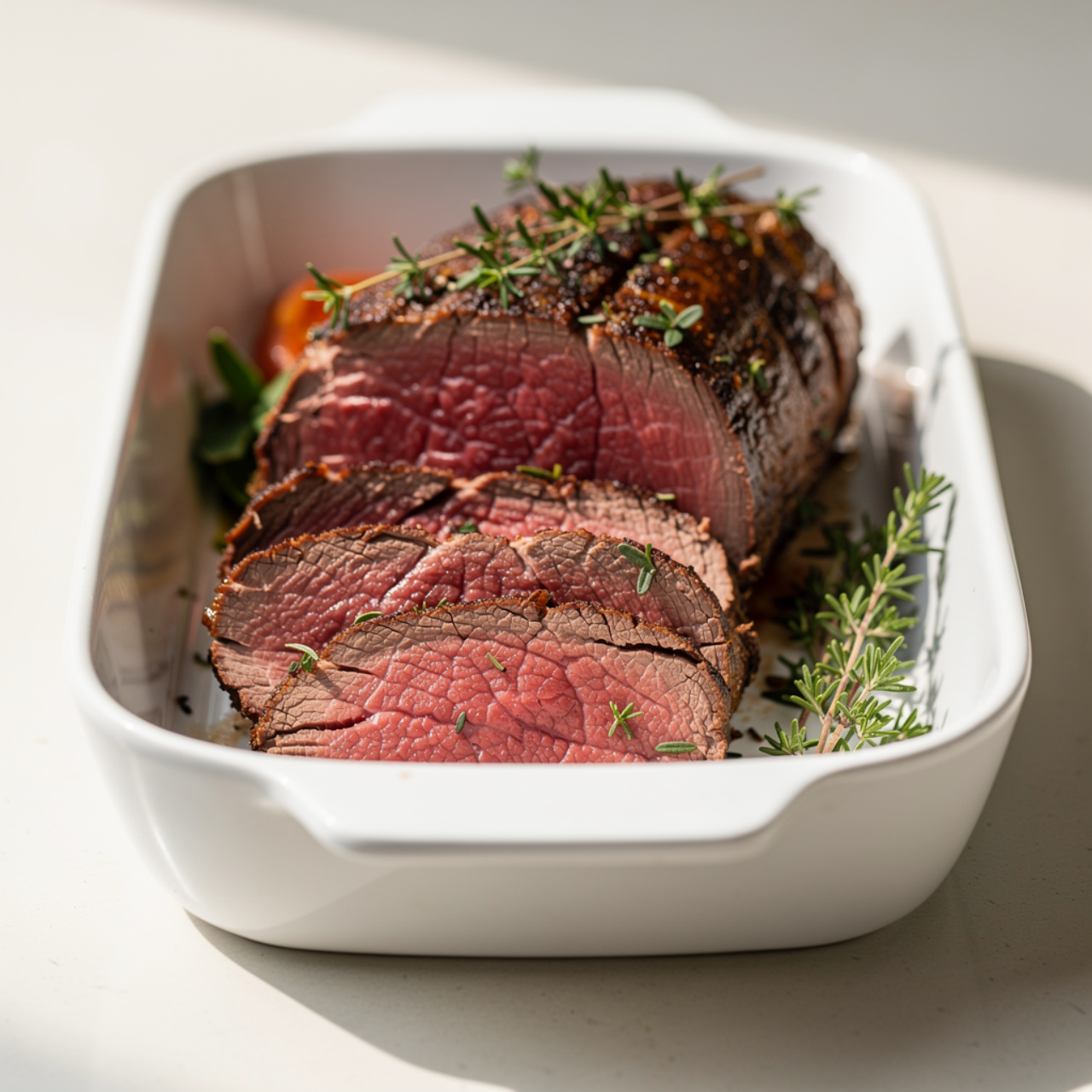
Best Ever Beef Tenderloin
This juicy beef tenderloin recipe delivers a perfectly seared, oven-finished roast with a golden crust and melt-in-your-mouth center, making it the ultimate easy beef tenderloin dinner for any special occasion.

The Only Beef Tenderloin Recipe You Will Ever Need
If you have been searching for the best ever beef tenderloin, one that comes out perfectly juicy every single time with a crackling herb-butter crust and a rosy, melt-in-your-mouth center, you have landed in exactly the right place. This recipe combines a simple cast iron sear with a quick oven finish, and the result is a showstopping roast that looks like it came out of a fine steakhouse kitchen.
Beef tenderloin has a reputation for being intimidating. It is one of the most prized cuts of beef, and people worry about getting it wrong. Here is the good news: the technique is surprisingly straightforward, and once you understand a few key principles, this easy beef tenderloin dinner becomes completely stress-free.
Before we get cooking, the right tools and ingredients make a real difference here. A quality cast iron skillet is the single most important piece of equipment for this recipe, delivering the ripping-hot sear that locks in those juices and builds the crust that sets this roast apart. A reliable instant-read thermometer is equally non-negotiable for hitting your exact doneness every time.
Why the Cast Iron Method Changes Everything
Most beef tenderloin recipes roast the meat low and slow, which is perfectly fine. But the cast iron method takes things to another level. By starting with a blazing-hot skillet on the stovetop and finishing in a high oven, you get:
- A deeply caramelized, golden-brown crust on all four sides
- A more evenly cooked interior with less of a grey band
- Rich, herb-infused pan drippings that double as a natural sauce
- Dramatically shorter total cooking time without sacrificing quality
This is the same technique used in professional kitchens, and it translates beautifully to a home oven.
Chef's Tip: Pat your tenderloin completely dry before seasoning. Moisture on the surface of the meat will steam rather than sear, and you will miss out on that gorgeous brown crust entirely.
Choosing and Prepping Your Tenderloin
For this recipe, you want a center-cut beef tenderloin, also called a Chateaubriand. This is the thickest, most uniform section of the tenderloin, which means it cooks evenly and gives you those beautiful round medallions when sliced.
When you bring it home from the butcher or grocery store, here is what to look for:
- Deep red color with minimal grey or brown discoloration
- A firm texture with visible marbling throughout
- Already trimmed of the silverskin, or ask your butcher to do it for you
Tying the roast with kitchen twine is a small step that makes a big difference. It keeps the tenderloin in a compact, uniform shape so it sears and roasts evenly from edge to edge. If your butcher has not already tied it, it takes about two minutes and is absolutely worth it.
The Seasoning
Beef tenderloin is naturally tender and buttery, so the seasoning should enhance, not overpower. A simple blend of kosher salt, freshly cracked black pepper, garlic powder, and smoked paprika creates a flavorful crust that complements the meat beautifully. If you want to add a layer of complexity, a thin brush of Dijon mustard before the oven goes on creates a subtle tang that pairs wonderfully with the herb butter.
Chef's Tip: Season your tenderloin the night before and leave it uncovered in the refrigerator. The salt will work its way deep into the meat, and the surface will dry out just enough to guarantee an exceptional sear.
The Herb Butter Baste
This is the step that takes a good beef tenderloin recipe and makes it genuinely unforgettable. Once the roast is seared on all sides, you drop butter, smashed garlic, rosemary, and thyme into the hot pan and spoon that foaming, fragrant butter continuously over the top of the roast for about a minute.
The result is a roast that smells like a French bistro and tastes like pure luxury. Do not skip this step.
Nailing the Temperature
Beef tenderloin is best served medium-rare to medium. Here are the target temperatures to pull the roast from the oven, keeping in mind that it will carry over about 5 degrees while it rests:
- Medium-rare: Pull at 125 degrees F, rest to 130 degrees F
- Medium: Pull at 135 degrees F, rest to 140 degrees F
- Medium-well: Pull at 145 degrees F, rest to 150 degrees F
An instant-read thermometer is your best friend here. Guessing the doneness of a tenderloin by touch or timing alone is a gamble this beautiful cut does not deserve.
Ready to make it? Here is the full step-by-step recipe:
Best Ever Beef Tenderloin
This juicy beef tenderloin recipe delivers a perfectly seared, oven-finished roast with a golden crust and melt-in-your-mouth center, making it the ultimate easy beef tenderloin dinner for any special occasion.
Ingredients
- 3 lb beef tenderloin roast, trimmed and tied with kitchen twine
- 2 tsp kosher salt, plus more to taste
- 1 1/2 tsp black pepper, freshly cracked
- 1 tsp garlic powder
- 1/2 tsp smoked paprika
- 4 tbsp unsalted butter, divided
- 2 tbsp olive oil, extra virgin
- 4 garlic cloves, smashed
- 3 fresh rosemary sprigs
- 4 fresh thyme sprigs
- 1 tbsp Dijon mustard, optional, for a herb crust
Instruction
Remove the beef tenderloin from the refrigerator at least 45 minutes before cooking to bring it to room temperature. Pat it completely dry with paper towels.
Preheat your oven to 425 degrees F (220 degrees C).
In a small bowl, combine the kosher salt, black pepper, garlic powder, and smoked paprika. Rub the spice mixture all over the tenderloin, pressing it in firmly on all sides.
Heat a large oven-safe cast iron skillet over high heat until smoking hot. Add the olive oil and 2 tablespoons of butter.
Carefully place the tenderloin in the skillet and sear without moving it for 2 to 3 minutes per side, turning to sear all four sides, until a deep brown crust forms. This should take about 10 to 12 minutes total.
Add the smashed garlic cloves, rosemary sprigs, and thyme sprigs to the skillet. Add the remaining 2 tablespoons of butter and tilt the pan slightly, spooning the melted herb butter over the top of the roast for about 1 minute.
If using Dijon mustard, brush a thin layer over the top of the seared roast at this point.
Transfer the skillet to the preheated oven. Roast for 20 to 25 minutes, or until an instant-read thermometer inserted into the thickest part reads 125 degrees F (52 degrees C) for medium-rare, or 135 degrees F (57 degrees C) for medium.
Remove the skillet from the oven and transfer the tenderloin to a cutting board. Tent it loosely with foil and let it rest for at least 10 to 15 minutes before slicing.
Remove the kitchen twine, slice into medallions about 1 inch thick, and serve immediately with the pan drippings spooned over the top.
Equipment
- Large oven-safe cast iron skillet (12-inch recommended)
- Instant-read meat thermometer
- Kitchen twine
- Cutting board
- Tongs
- Small mixing bowl
- Aluminum foil
- Pastry brush (optional, for mustard crust)
Notes
Serving, Storing, and Variations
What to Serve with Beef Tenderloin
This roast is elegant enough to anchor any holiday table or dinner party spread. Some of our favorite pairings include:
- Creamy mashed potatoes or potato gratin to soak up the pan drippings
- Roasted asparagus or haricots verts for a bright, fresh contrast
- A simple red wine pan sauce made by deglazing the skillet with Cabernet or beef stock
- Horseradish cream on the side for a sharp, classic complement
Storing Leftovers
Leftover beef tenderloin keeps well in an airtight container in the refrigerator for up to 3 days. Reheat gently in a low oven at 275 degrees F with a splash of beef broth and a tight foil cover to keep it moist. Avoid the microwave, which tends to make the meat tough and rubbery.
Variations Worth Trying
Once you have mastered this base recipe, there are a few directions worth exploring:
- Peppercorn Crust: Coat the roast in coarsely crushed mixed peppercorns for a bold, steakhouse-style crust
- Garlic Herb Compound Butter: Finish sliced medallions with a pat of homemade garlic herb butter right before serving
- Simple Cast Iron Venison Tenderloin: This exact technique works brilliantly with venison tenderloin. The leaner cut benefits from the butter baste even more, and the cook time is slightly shorter
Whether you are cooking this for a holiday gathering, a special anniversary dinner, or simply because you deserve something magnificent on a weeknight, this recipe will not let you down. It is easy, reliable, and genuinely the best beef tenderloin you will ever make.