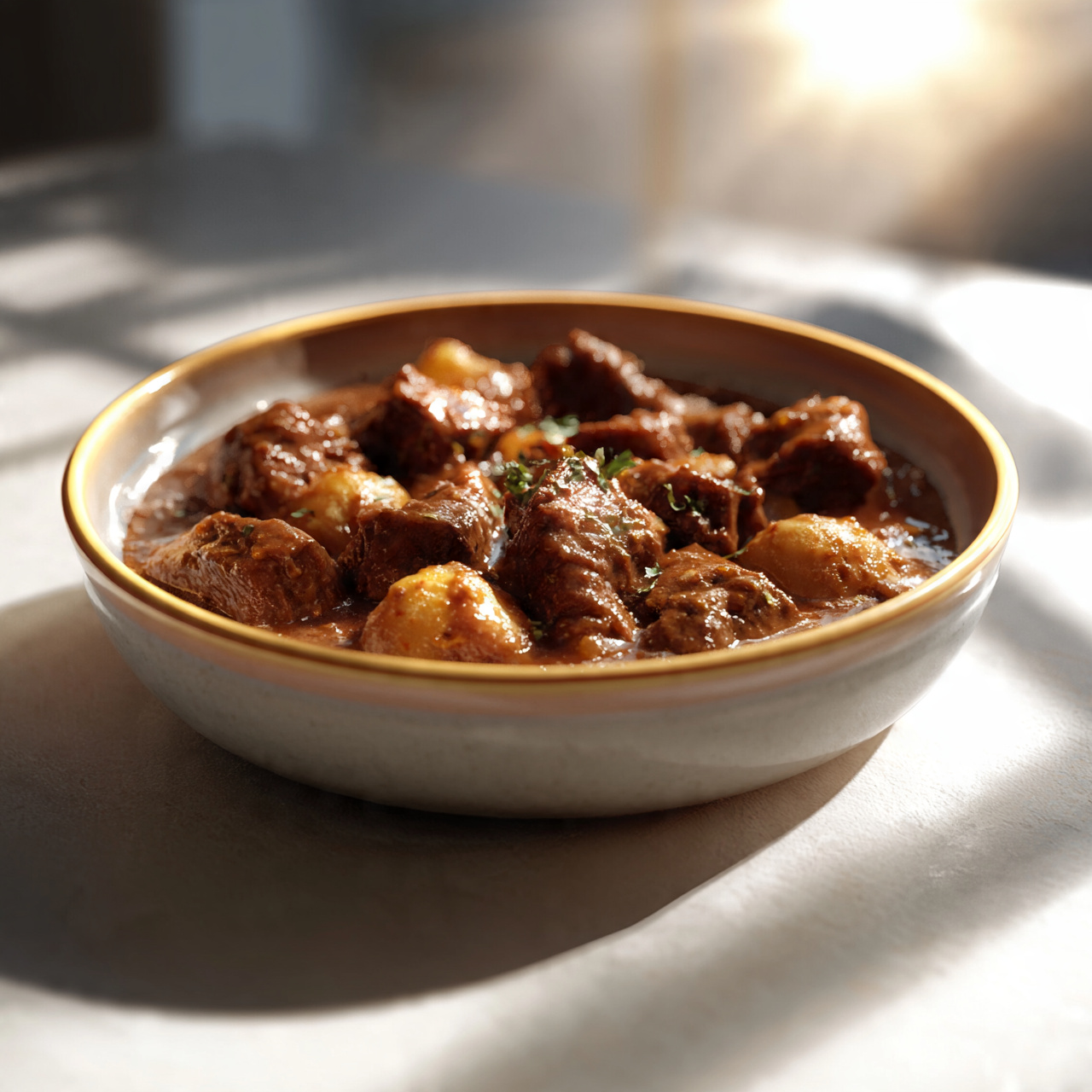
Classic Beef Stew with Potatoes (Hearty and Soul-Warming)
This rich and hearty beef stew with potatoes is the ultimate comfort meal recipe, loaded with tender chunks of beef, chunky vegetables, and a deeply savory broth that tastes like it simmered all day.

The Kind of Beef Stew That Makes the Whole House Smell Amazing
There are certain recipes that feel less like cooking and more like an act of care. This classic beef stew with potatoes is one of them. It is the sort of warm food idea that earns its place in your weekly rotation quickly, the kind of pot meal that simmers low and slow while you go about your day, filling every corner of the kitchen with a deep, savory aroma that is genuinely difficult to ignore.
Whether you are cooking for two on a quiet weeknight or feeding a hungry crowd on a cold weekend, this is the comfort meal recipe you will come back to again and again. It is hearty without being heavy, deeply flavorful without requiring obscure ingredients, and forgiving enough for home cooks at every level.
Why This Recipe Works
The secret to a truly great beef stew with potatoes is not a long list of fancy ingredients. It is technique and patience applied to simple, honest food.
- Searing the beef properly builds the foundation. That deep brown crust on every piece of beef chuck is where all the complex, savory flavor begins.
- Tomato paste and red wine add layers of richness that make the broth taste like it simmered for hours even when it has not.
- Yukon Gold potatoes hold their shape beautifully through the long cooking time rather than dissolving into mush.
- A slow, covered simmer transforms tough, affordable beef chuck into something fork-tender and silky.
This is one of the best easy meat recipes for dinner precisely because the method does most of the work for you.
Using the right pot makes a genuine difference in recipes like this. A heavy Dutch oven distributes heat evenly and holds a steady simmer without hot spots that can toughen the beef. Good-quality low-sodium beef broth also matters here since it forms the backbone of every spoonful.
Choosing the Right Beef
For food recipes built around slow-braised meat, beef chuck is the only cut worth using. It comes from the shoulder of the animal and is loaded with connective tissue that melts down into rich gelatin during cooking, giving the broth that luxurious, slightly thick body that separates a great stew from a watery one.
Avoid the temptation to use pre-cut "stew meat" from the grocery store. It is often a mix of random trimmings from different cuts and will cook unevenly. Buy a chuck roast and cut it yourself into generous 1.5-inch cubes. Bigger pieces stay juicier.
Chef's Tip: Dry your beef cubes thoroughly with paper towels before searing. Even a small amount of surface moisture will cause the meat to steam instead of brown, and you will miss out on all that deep, caramelized flavor.
Building a Broth Worth Eating
The broth in this stew deserves its own moment of attention. It is not just a cooking liquid. After 90 minutes of slow simmering with the beef, vegetables, fresh thyme, and bay leaves, it becomes something deeply savory and complex.
A few things make it sing:
- Worcestershire sauce adds a subtle umami depth that is hard to put a finger on but easy to notice when it is missing.
- A splash of red wine deglazes the pot and lifts all those precious browned bits from the bottom, folding them back into the broth.
- Tomato paste, cooked briefly until it darkens, adds body and a gentle sweetness that balances the richness of the beef.
These are the small moves that separate a memorable quick stew recipe from something merely adequate.
Perfect for Cozy Easy Beef Meals For Two or a Crowd
One of the best things about this recipe is how naturally it scales. As written, it serves six generously, making it ideal for meal prep or feeding a family. But it is equally wonderful scaled down for easy beef meals for two on a slow Sunday afternoon.
Leftovers are arguably better the next day. The beef absorbs even more of the broth overnight, and the flavors deepen and meld in a way that fresh-off-the-stove stew just cannot quite match. Serve it with thick slices of crusty bread for soaking up every last drop of that incredible broth.
Storage Tip: Let the stew cool completely before refrigerating. Storing it hot in a sealed container traps steam and can make the broth watery.
Ready to make the most satisfying food dinner recipe of the season? Here is everything you need:
Classic Beef Stew with Potatoes (Hearty and Soul-Warming)
This rich and hearty beef stew with potatoes is the ultimate comfort meal recipe, loaded with tender chunks of beef, chunky vegetables, and a deeply savory broth that tastes like it simmered all day.
Ingredients
- 2 lb beef chuck, cut into 1.5-inch cubes, excess fat trimmed
- 3 tbsp all-purpose flour, for dredging
- 2 tbsp olive oil, extra virgin
- 1 yellow onion, large, roughly chopped
- 4 garlic cloves, minced
- 2 tbsp tomato paste
- 1/2 cup dry red wine, such as Cabernet Sauvignon; substitute with extra beef broth if preferred
- 3 cups beef broth, low sodium
- 1 tbsp Worcestershire sauce
- 1 1/2 lb Yukon Gold potatoes, cut into 1-inch chunks, skin on
- 3 carrots, medium, peeled and sliced into thick rounds
- 2 celery stalks, sliced
- 4 fresh thyme, sprigs; or 0.5 tsp dried thyme
- 2 bay leaves, remove before serving
- 1 tsp salt, plus more to taste
- 1/2 tsp black pepper, freshly ground
- 2 tbsp fresh parsley, chopped, for garnish
Instruction
Pat the beef cubes completely dry with paper towels, then season generously with salt and pepper. Toss the beef in flour until each piece is lightly coated, shaking off any excess.
Heat the olive oil in a large Dutch oven or heavy-bottomed pot over medium-high heat until shimmering. Working in two batches to avoid crowding, sear the beef for 3 to 4 minutes per side until deeply browned on all sides. Transfer the seared beef to a plate and set aside.
Reduce the heat to medium. Add the chopped onion and celery to the same pot and cook, stirring occasionally, for about 4 minutes until softened and the onion turns translucent.
Add the minced garlic and tomato paste. Stir constantly for 1 to 2 minutes until the tomato paste darkens slightly and becomes fragrant.
Pour in the red wine and scrape up all the browned bits from the bottom of the pot using a wooden spoon. Let the wine simmer for 2 minutes.
Return the seared beef to the pot. Add the beef broth, Worcestershire sauce, fresh thyme sprigs, and bay leaves. Stir to combine, then bring the mixture to a boil.
Reduce the heat to low, cover the pot with a lid, and let the stew simmer gently for 45 minutes.
Add the potatoes and carrots to the pot, stirring to submerge them in the broth. Replace the lid and continue simmering for an additional 35 to 40 minutes, or until the beef is fork-tender and the potatoes are cooked through.
Remove and discard the thyme sprigs and bay leaves. Taste the stew and adjust seasoning with additional salt and pepper as needed. If you prefer a thicker broth, mash a few potato chunks against the side of the pot with a spoon and stir them in.
Ladle the stew into bowls and garnish with freshly chopped parsley. Serve hot with crusty bread on the side.
Equipment
- Large Dutch oven or heavy-bottomed pot (at least 6-quart)
- Wooden spoon or silicone spatula
- Sharp chef's knife
- Cutting board
- Paper towels
- Ladle
- Measuring cups and spoons
Notes
Serving Ideas and Variations
This stew is a complete meal on its own, but a few simple additions take it even further:
- Crusty sourdough or a warm baguette for dipping
- Egg noodles or mashed potatoes if you want to stretch it further and skip the potato chunks inside the stew
- A simple green salad with a sharp vinaigrette to cut through the richness
For variations, consider stirring in a handful of frozen peas in the last 5 minutes for a pop of color and sweetness, or adding a cup of mushrooms alongside the onions for an earthier, more robust flavor profile.
However you serve it, this classic beef stew with potatoes delivers exactly what comfort meal recipes are supposed to: warmth, depth, and the kind of satisfaction that lingers long after the bowl is empty.