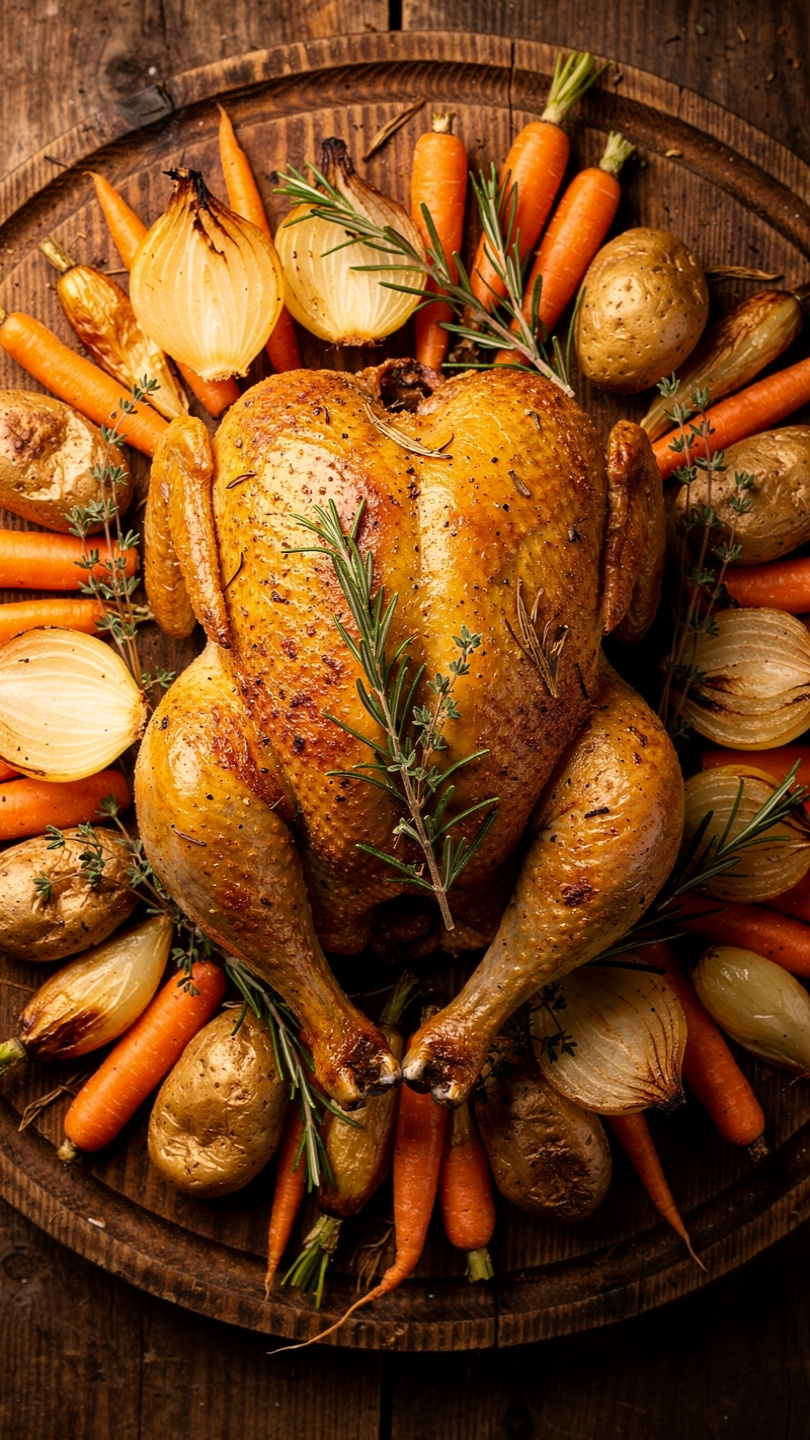
Perfect Whole Roast Chicken with Crispy Golden Skin
This juicy, herb-buttered whole roast chicken delivers shatteringly crispy skin and tender, flavorful meat that makes every Sunday dinner or Easter table feel truly special.

The Whole Roast Chicken That Belongs on Every Family Table
There is something almost magical about a whole roast chicken. It fills the kitchen with an aroma that feels like a warm hug, it anchors the table in a way few other dishes can, and somehow it manages to feel simultaneously effortless and deeply impressive. Whether you are pulling together one of those hearty family dinners on a cold Sunday night or setting out a show-stopping centerpiece for an Easter celebration, a beautifully roasted whole chicken never, ever fails to deliver.
This recipe is the one I come back to again and again. It is not complicated. There are no tricks requiring a culinary degree. What it does require is a little patience, the right technique, and an honest commitment to a handful of great ingredients. The reward is shatteringly crispy golden skin, meat so juicy it practically sighs when you cut into it, and a pan full of gorgeous drippings that beg to be turned into a simple sauce.
Why This Recipe Works
A lot of whole chicken recipes produce respectable results. This one produces remarkable results, and the difference comes down to a few key decisions.
Drying the chicken completely is the non-negotiable foundation of crispy skin. Any moisture sitting on the surface will steam in the oven rather than roast, and steamed skin is the enemy of everything we are going for here.
Herb butter under and over the skin means the chicken breast and thighs are basted from the inside out the entire time they cook. Even the leanest part of the chicken, which is the breast with skin on, stays incredibly tender and flavorful because that butter is working directly against the meat.
A bed of aromatics in the pan does double duty. It keeps the chicken lifted slightly for more even airflow, and it perfumes the drippings with onion, carrot, and celery so that every spoonful of those pan juices tastes like liquid gold.
Starting hot, finishing gentle gives you the best of both worlds: a beautifully browned exterior from the initial blast of heat and a fully, evenly cooked interior from the lower temperature finish.
Chef's Tip: Let your chicken rest at room temperature for at least 30 minutes before it goes into the oven. A cold bird straight from the refrigerator takes longer to cook through, which means the outer layers are overcooked by the time the center reaches temperature.
The Right Tools Make a Real Difference
For a recipe this straightforward, your equipment genuinely matters. A heavy roasting pan that conducts heat evenly, a reliable instant-read thermometer, and good kitchen twine are not optional extras here. They are what stand between a good chicken and a great one.
Building Flavor From Scratch
The herb butter is the heart of this recipe, and it is worth spending an extra two minutes on it. Use real softened butter, not margarine and not melted butter. Softened butter stays where you put it and coats every surface evenly as it roasts. Combine it with fresh rosemary, thyme, and minced garlic, and you have something that genuinely elevates even a simple weeknight chicken into one of those amazing family dinners people ask about for weeks afterward.
If you can find a good quality fresh chicken from a local butcher, even better. Fresh chicken breast recipes always shine brightest when the bird itself is high quality. That said, a well-prepared standard grocery store chicken using this method will still produce results you will be proud of.
Chef's Tip: Push a generous amount of herb butter underneath the skin before you roast. Skin acts as a barrier, so butter sitting only on the outside adds flavor but does not penetrate the meat nearly as well.
A Truly Versatile Centerpiece
One of the best things about mastering a whole roast chicken is how far a single bird stretches. Carved hot from the oven, it is a stunning Sunday chicken breast dinner with roasted vegetables on the side. The next day, the leftover meat slides effortlessly into soups, salads, grain bowls, or sandwiches. And the carcass? That is the beginning of a beautiful homemade stock.
This recipe is equally at home on a casual Tuesday night as it is as a chicken breast Easter dinner centerpiece. The same technique, the same ingredients, just a different table setting.
Ready to make it? Here is the full step-by-step recipe:
Perfect Whole Roast Chicken with Crispy Golden Skin
This juicy, herb-buttered whole roast chicken delivers shatteringly crispy skin and tender, flavorful meat that makes every Sunday dinner or Easter table feel truly special.
Ingredients
- 1 whole chicken, 3.5 to 4.5 lbs, patted completely dry with paper towels
- 4 tbsp unsalted butter, softened to room temperature
- 6 garlic cloves, 4 minced, 2 smashed for the cavity
- 2 tbsp fresh rosemary, finely chopped
- 1 tbsp fresh thyme leaves, stripped from stems
- 2 tsp kosher salt, plus more to season inside the cavity
- 1 tsp black pepper, freshly cracked
- 1 lemon, halved, for the cavity
- 1 yellow onion, quartered, for the roasting pan
- 2 carrots, roughly chopped, for the roasting pan
- 2 celery stalks, roughly chopped, for the roasting pan
- 1 tbsp olive oil, extra virgin, for drizzling over vegetables
- 1/2 cup low-sodium chicken broth, for the bottom of the roasting pan to prevent drippings from burning
Instruction
Remove the chicken from the refrigerator at least 30 minutes before cooking so it comes to room temperature. Preheat your oven to 425 degrees F (220 degrees C).
Pat the chicken completely dry inside and out with paper towels. This is the single most important step for achieving crispy skin, so do not skip it.
In a small bowl, mix together the softened butter, minced garlic, rosemary, thyme, 1.5 teaspoons of kosher salt, and all of the black pepper until well combined into a herb butter.
Using your fingers, gently loosen the skin over the chicken breasts and thighs without tearing it. Push roughly half of the herb butter underneath the skin and massage it evenly over the meat.
Rub the remaining herb butter all over the outside of the chicken, coating every surface generously.
Season the cavity liberally with the remaining kosher salt. Stuff the cavity with the lemon halves and smashed garlic cloves.
Toss the quartered onion, carrots, and celery with olive oil and a pinch of salt, then spread them across the bottom of a large roasting pan or oven-safe skillet. Pour the chicken broth over the vegetables.
Place the chicken breast-side up on top of the vegetables. Tie the legs together with kitchen twine and tuck the wing tips under the body.
Roast for 20 minutes at 425 degrees F to get the skin started, then reduce the oven temperature to 375 degrees F (190 degrees C) and continue roasting for 55 to 70 minutes more, until the thickest part of the thigh registers 165 degrees F (74 degrees C) on an instant-read thermometer.
Baste the chicken with the pan drippings once or twice during the final 30 minutes of cooking for extra flavor and color.
Remove the chicken from the oven and tent loosely with foil. Let it rest for at least 15 minutes before carving. This allows the juices to redistribute throughout the meat.
Equipment
- Large roasting pan or oven-safe skillet (at least 12 inches)
- Instant-read meat thermometer
- Kitchen twine
- Small mixing bowl
- Basting brush
- Carving board and knife
- Aluminum foil
Notes
Serving Suggestions and Toppings
A perfectly roasted whole chicken is a complete meal on its own, but thoughtful sides and toppings can elevate it even further. Consider some of these ideas for toppings for chicken and sides that complement it beautifully:
- A simple pan sauce: Strain the drippings, whisk in a splash of white wine or broth, and finish with a knob of cold butter.
- Fresh herbs and lemon zest scattered over the carved meat right before serving add brightness that cuts through the richness.
- Roasted garlic mashed potatoes or crusty bread to soak up every last drop of those pan juices.
- For a nod to southern dishes dinners, serve alongside braised greens, cornbread, or a tangy coleslaw.
However you serve it, carve at the table if you can. There is something about presenting a whole golden chicken that turns an ordinary dinner into a proper occasion.
Storing and Reheating
Leftovers keep beautifully in an airtight container in the refrigerator for up to 4 days. To reheat without drying out the meat, place carved pieces in a baking dish, add a small splash of broth or water, cover loosely with foil, and warm in a 350 degree F oven for about 10 to 15 minutes. Avoid the microwave if you can, as it tends to toughen the meat and soften any remaining crispy skin.
This is the kind of recipe that earns a permanent spot in your rotation. Once you roast a chicken this way, it is very difficult to go back to anything else.