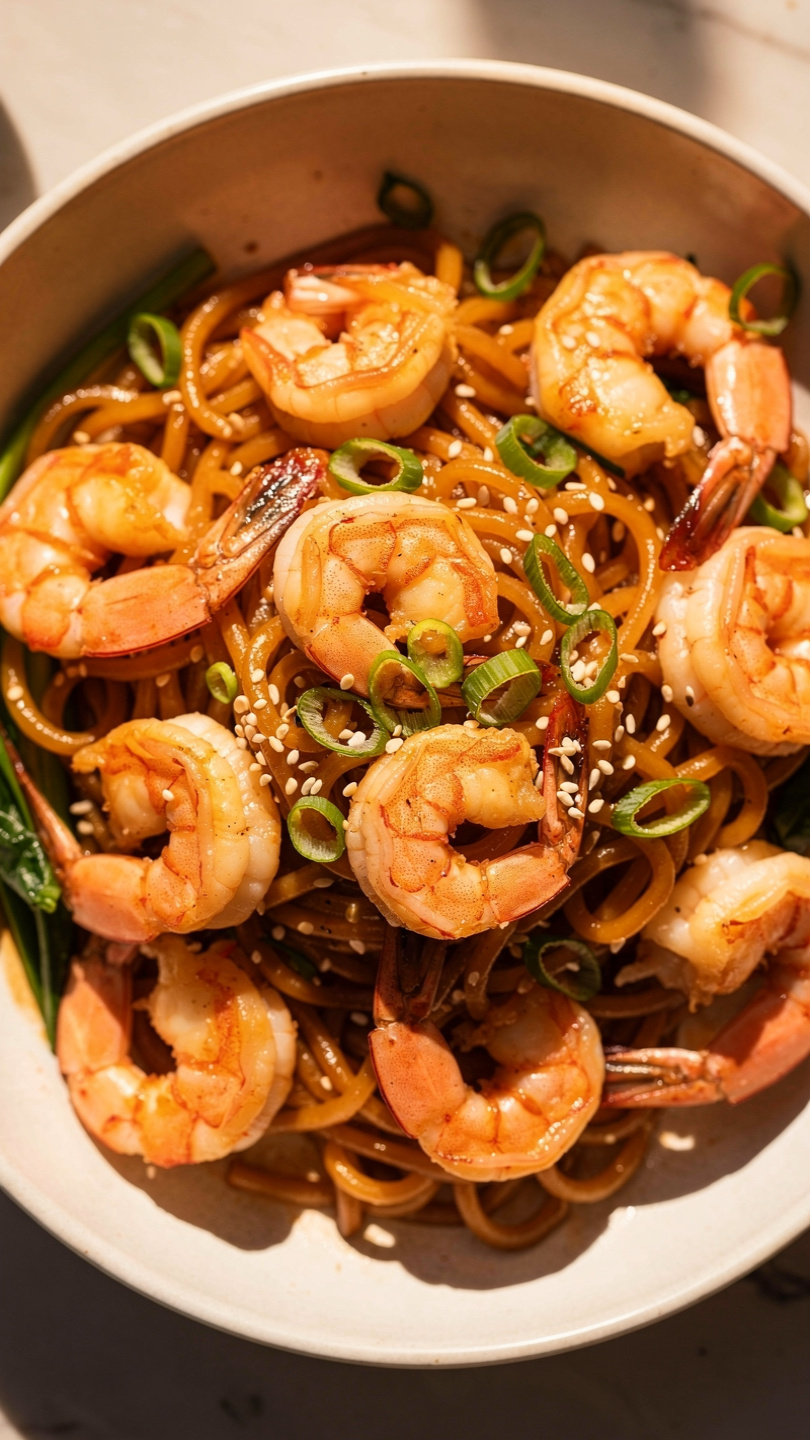
Shrimp Lo Mein (Better Than Takeout!)
This Shrimp Lo Mein is a quick, flavor-packed noodle dish loaded with tender shrimp, silky thick noodles, and crisp vegetables tossed in a savory Cantonese-style sauce. Ready in 30 minutes and way better than takeout.

The Only Shrimp Lo Mein Recipe You'll Ever Need
If you have ever stood in your kitchen at 6pm wondering what to make for dinner, this Shrimp Lo Mein is your answer. It is faster than delivery, infinitely more satisfying, and once you nail the sauce, you will genuinely never want to order noodles from a restaurant again. Tender, juicy shrimp. Thick, silky noodles. Crisp vegetables. All tangled up in a glossy, savory Cantonese-style sauce that clings to every bite.
This is real comfort food. The kind of yummy lunch food or quick weeknight dinner that earns you requests every single week.
Why This Recipe Works
Lo mein gets a bad reputation as a greasy, forgettable side dish. When it is done right, it is anything but. The secret to great noodle recipes with shrimp is controlling heat and timing. Everything moves fast in a hot wok, which means juicy shrimp, vegetables that still have a little bite, and noodles that are coated in sauce rather than drowned in it.
A few things that make this version genuinely special:
- Oyster sauce is non-negotiable. It is the backbone of authentic Cantonese lo mein flavor and adds a rich, slightly briny sweetness that soy sauce alone cannot replicate.
- High heat creates that subtle wok-char on the noodles. Do not be shy about cranking your burner all the way up.
- Dry shrimp before they hit the pan. Moisture is the enemy of a good sear. Pat them thoroughly and they will cook up plump and golden instead of steaming and turning rubbery.
- Fresh lo mein noodles give you the best thick noodle texture. Find them at any Asian grocery store. They are refrigerated, springy, and absolutely worth seeking out.
Before we get into it, having the right setup makes a real difference here. A proper wok, good oyster sauce, and fresh lo mein noodles are the three ingredients that separate an okay dish from a great one.
Building the Perfect Lo Mein Sauce
The sauce is everything. This is not a complex sauce, but every ingredient has a purpose.
- Soy sauce provides saltiness and umami depth.
- Oyster sauce adds that signature Cantonese lo mein richness.
- Hoisin sauce brings a subtle sweetness and body.
- Sesame oil goes in at the end, off the heat. It is a finishing oil, not a cooking oil, and its toasted, nutty aroma is what makes the dish smell irresistible.
- A pinch of sugar balances all the savory notes without making the dish taste sweet.
- Cornstarch thickens the sauce just enough so it clings to the noodles rather than pooling at the bottom of the bowl.
Whisk it all together before you start cooking. Once the wok is hot, everything moves quickly and you will not have time to measure.
Chef's Tip: Make a double batch of the sauce and keep it in a jar in the fridge for up to a week. It works on fried rice, stir fried vegetables, and noodle recipes with shrimp or chicken. Having it ready cuts your dinner prep in half.
Vegetables and Variations
This recipe uses cabbage, carrots, and red bell pepper, a classic combination that adds color, crunch, and sweetness. But lo mein is wonderfully flexible. Think of it as a template, not a rulebook.
Some variations worth trying:
- Crab Meat Lo Mein: Swap the shrimp for lump crab meat. Add it off the heat at the very end so it just warms through without breaking apart.
- Mixed seafood: Combine shrimp with scallops or squid for a more luxurious bowl.
- Extra vegetables: Bok choy, snap peas, mushrooms, and baby corn all work beautifully.
- Spicy version: Add a tablespoon of chili garlic sauce or a drizzle of chili oil at the end.
If you are cooking this as fun recipes for lunch, it reheats like a dream the next day too.
Tips for Noodle Success
The most common lo mein mistake is overcooked, mushy noodles. Here is how to avoid it:
- Cook the noodles just under al dente. They will finish cooking in the wok.
- Rinse them briefly with cold water after draining to stop carryover cooking.
- Toss them with a small amount of oil immediately so they do not stick together while you prep everything else.
- When the noodles hit the wok, do not stir constantly. Let them sit for 20 to 30 seconds at a time so they pick up a little color from the heat.
Think of this as dishes to cook for dinner that reward a little patience at exactly the right moments.
Ready to bring it all together? Here is the complete recipe with every step, measurement, and timing detail you need:
Shrimp Lo Mein (Better Than Takeout!)
This Shrimp Lo Mein is a quick, flavor-packed noodle dish loaded with tender shrimp, silky thick noodles, and crisp vegetables tossed in a savory Cantonese-style sauce. Ready in 30 minutes and way better than takeout.
Ingredients
- 12 oz lo mein noodles, fresh or dried; thick noodles preferred
- 1 lb large shrimp, peeled, deveined, tails removed
- 3 tbsp vegetable oil, divided
- 4 garlic cloves, minced
- 1 tsp fresh ginger, grated
- 2 cups green cabbage, thinly shredded
- 2 carrots, julienned or cut into thin matchsticks
- 1 red bell pepper, thinly sliced
- 4 green onions, sliced, whites and greens separated
- 3 tbsp soy sauce, low sodium recommended
- 2 tbsp oyster sauce, key for authentic Cantonese lo mein flavor
- 1 tbsp sesame oil, toasted, added at the end
- 1 tbsp hoisin sauce
- 1/4 cup chicken broth, or water
- 1 tsp cornstarch, to thicken the sauce slightly
- 1/4 tsp white pepper
- 1 tsp sugar, balances the sauce
Instruction
Cook the lo mein noodles according to package directions until just al dente. Drain, rinse briefly with cold water to stop cooking, and toss with 1 teaspoon of vegetable oil to prevent sticking. Set aside.
In a small bowl, whisk together the soy sauce, oyster sauce, hoisin sauce, sesame oil, chicken broth, cornstarch, sugar, and white pepper. Set the sauce aside.
Pat the shrimp completely dry with paper towels. Season lightly with a pinch of salt and white pepper.
Heat a large wok or skillet over high heat until smoking. Add 1 tablespoon of oil. Add the shrimp in a single layer and cook undisturbed for 60 to 90 seconds, then flip and cook another 30 to 60 seconds until just pink and curled. Remove shrimp to a plate and set aside.
Add the remaining 2 tablespoons of oil to the same wok over high heat. Add the white parts of the green onions, garlic, and ginger. Stir fry for 30 seconds until fragrant.
Add the carrots and red bell pepper. Stir fry for 2 minutes until slightly softened but still crisp.
Add the shredded cabbage and toss for another 1 to 2 minutes.
Add the drained noodles to the wok. Pour the sauce over everything. Toss and stir fry vigorously for 2 minutes until the noodles are evenly coated and lightly caramelized from the heat.
Return the cooked shrimp to the wok. Toss everything together for another 30 seconds just to reheat the shrimp.
Remove from heat. Garnish with the green parts of the green onions. Serve immediately.
Equipment
- Large wok or 12-inch skillet
- Large pot (for boiling noodles)
- Colander
- Small mixing bowl
- Whisk
- Tongs or wok spatula
- Cutting board and sharp knife
Notes
Serving and Storing Your Shrimp Lo Mein
Serve this straight from the wok while it is piping hot and the noodles are still glossy. A few finishing touches that make a big difference:
- A scatter of thinly sliced green onions
- A drizzle of extra sesame oil
- Toasted sesame seeds for crunch
- Chili oil on the side for anyone who likes heat
Leftovers store well in the fridge for up to three days. Reheat in a hot pan with a tiny splash of water or broth to bring the noodles back to life. The flavor actually deepens overnight, making this one of those rare dishes that is just as good the next day.
Whether you are making this as a satisfying weeknight dinner or a bowl of yummy lunch food to pack for the next day, Shrimp Lo Mein delivers every single time. Once you have made it once, it will be in your regular rotation for good.