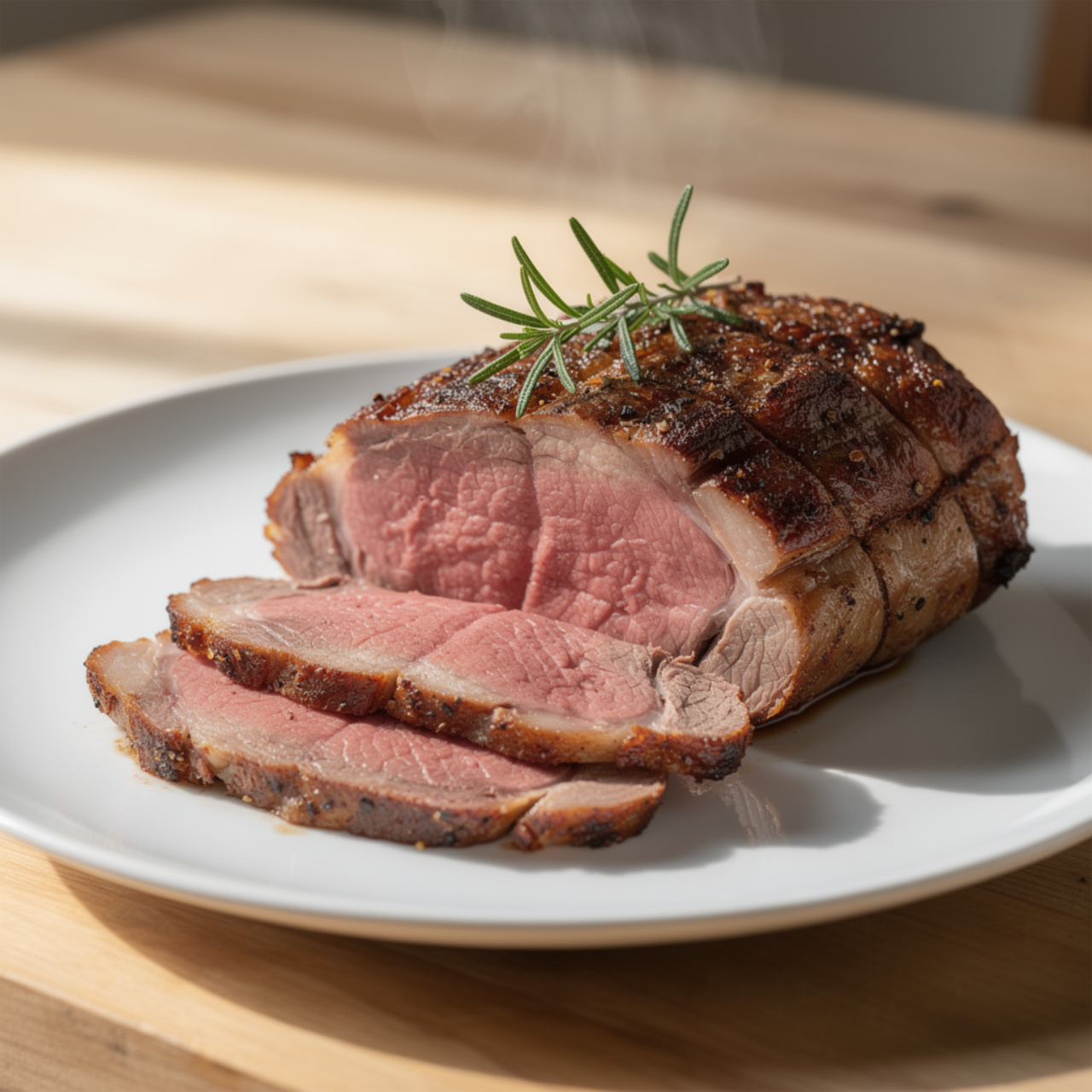
Perfect Roast Beef
Learn how to roast beef perfectly every time with a golden herb crust, juicy tender center, and rich pan juices for an easy yet impressive Sunday dinner.

The Secret to a Perfect Roast Beef Every Time
There is something deeply comforting about a roast beef dinner. The smell that fills the kitchen, the golden herb crust, the first slice that reveals a juicy pink center. This recipe walks you through exactly how to cook a roast beef that turns out tender and flavorful, whether it is a casual Sunday dinner or the centerpiece of a holiday table. No fancy techniques required, just a few smart steps and a good thermometer.
Before we get cooking, the right tools and ingredients make a real difference here. A reliable meat thermometer is what separates a perfectly cooked roast from a guessing game, and a sturdy roasting pan with a rack lets hot air circulate evenly around the meat. These are the products that genuinely help this recipe shine:
Choosing the Best Meat for Roast Beef
Not every cut is built for roasting, so picking the best meat for roast beef matters more than people realize. Lean, naturally tender cuts work best for a classic sliceable roast:
- Top round or eye of round for a budget-friendly, lean roast with great flavor
- Sirloin tip for a slightly richer bite
- Ribeye roast or prime rib for a special-occasion splurge with more marbling
Whatever cut you choose, look for even thickness and good color, and try to buy it a day or two before you plan to cook so the seasoning has time to work its way in.
How to Season Beef for Roasting
Knowing how to season beef for roasting is honestly half the battle. A generous coating of kosher salt, cracked black pepper, garlic, rosemary, and thyme creates a savory crust that locks in flavor as the roast cooks. Salting ahead of time, even just an hour but ideally overnight, draws moisture to the surface where it dissolves the salt and gets reabsorbed, seasoning the meat all the way through.
Chef's Tip: Always pat the roast bone dry before adding oil and seasoning. A dry surface browns far better than a damp one, and that browning is where most of the flavor comes from.
How to Roast Beef Perfectly
This is the best way to cook roast beef if you want a deeply browned crust and a juicy interior. Start hot, then go low. Searing at 450 degrees F for the first 15 minutes builds color and flavor on the outside, then dropping the oven to 325 degrees F lets the inside cook gently and evenly, which is exactly how to cook tender roast meat without drying it out. Pull the roast a few degrees before your target temperature, since it keeps cooking as it rests.
For reference, here is what to aim for on the thermometer:
- Rare: about 125 degrees F
- Medium rare: about 130 to 135 degrees F
- Medium: about 140 to 145 degrees F
How to Roast Beef Outdoors
If the oven is busy or it is grilling season, you can absolutely roast beef outdoors using the same hot-then-low logic. Sear the roast directly over hot coals or a high burner for a few minutes per side, then move it to indirect heat, close the lid, and let it finish cooking slowly to the same target temperatures listed above. A thermometer is even more essential outdoors since flare-ups can fool you.
Ready to make it? Here is the full step-by-step recipe for perfect roast beef, how to cook it included:
Perfect Roast Beef
Learn how to roast beef perfectly every time with a golden herb crust, juicy tender center, and rich pan juices for an easy yet impressive Sunday dinner.
Ingredients
- 3 lb beef roast, top round or eye of round, trimmed and brought to room temperature
- 2 tbsp olive oil, extra virgin
- 1 tbsp kosher salt, or to taste
- 1 tsp black pepper, freshly ground
- 4 garlic cloves, minced
- 2 tbsp fresh rosemary, finely chopped
- 1 tbsp fresh thyme, finely chopped
- 2 tbsp unsalted butter, softened
- 1 yellow onion, quartered, for the roasting bed
- 2 carrots, cut into large chunks
- 1 cup beef broth, for pan juices, optional
Instruction
Remove the roast from the fridge about 1 hour before cooking so it can come closer to room temperature, which helps it cook more evenly.
Preheat the oven to 450 degrees F (230 degrees C).
Pat the roast completely dry with paper towels, then rub it all over with olive oil.
In a small bowl, mix the salt, pepper, garlic, rosemary, and thyme. Press this mixture firmly over the entire surface of the roast.
Rub the softened butter over the top of the roast for extra richness and browning.
Scatter the onion and carrots in the bottom of a roasting pan to form a bed, then set the roast on top, fat side up, ideally on a rack.
Roast at 450 degrees F (230 degrees C) for 15 minutes to sear the outside and lock in flavor.
Reduce the oven temperature to 325 degrees F (165 degrees C) and continue roasting until a meat thermometer inserted into the thickest part reads 130 to 135 degrees F (54 to 57 degrees C) for medium rare, about 50 to 65 minutes more depending on the size of your roast.
Transfer the roast to a cutting board, tent loosely with foil, and let it rest for 15 to 20 minutes. The internal temperature will rise about 5 degrees as it rests.
While the meat rests, pour the pan drippings and vegetables into a saucepan with the beef broth, simmer for a few minutes, then strain for a simple jus.
Slice the roast thinly against the grain and serve warm with the pan juices.
Equipment
- Roasting pan with a rack
- Meat thermometer
- Sharp carving knife
- Cutting board
- Aluminum foil
Notes
What to Have with Roast Beef
Once you know what to have with roast beef, dinner basically plans itself. Classic pairings include:
- Creamy mashed potatoes or roasted baby potatoes
- Buttery Yorkshire pudding
- Glazed carrots or roasted root vegetables
- A sharp horseradish cream or simple pan gravy
A crisp green salad on the side helps balance the richness of the meat.
Storing and Reheating Leftovers
Leftover roast beef stays tender if you slice it thinly and store it in an airtight container with a bit of the pan jus to keep it moist. It will keep in the fridge for 3 to 4 days. For the best texture, reheat gently in a low oven rather than the microwave, or simply enjoy it cold piled into a sandwich with a smear of horseradish and some crusty bread. Either way, you will have a meal that tastes just as good the second time around.