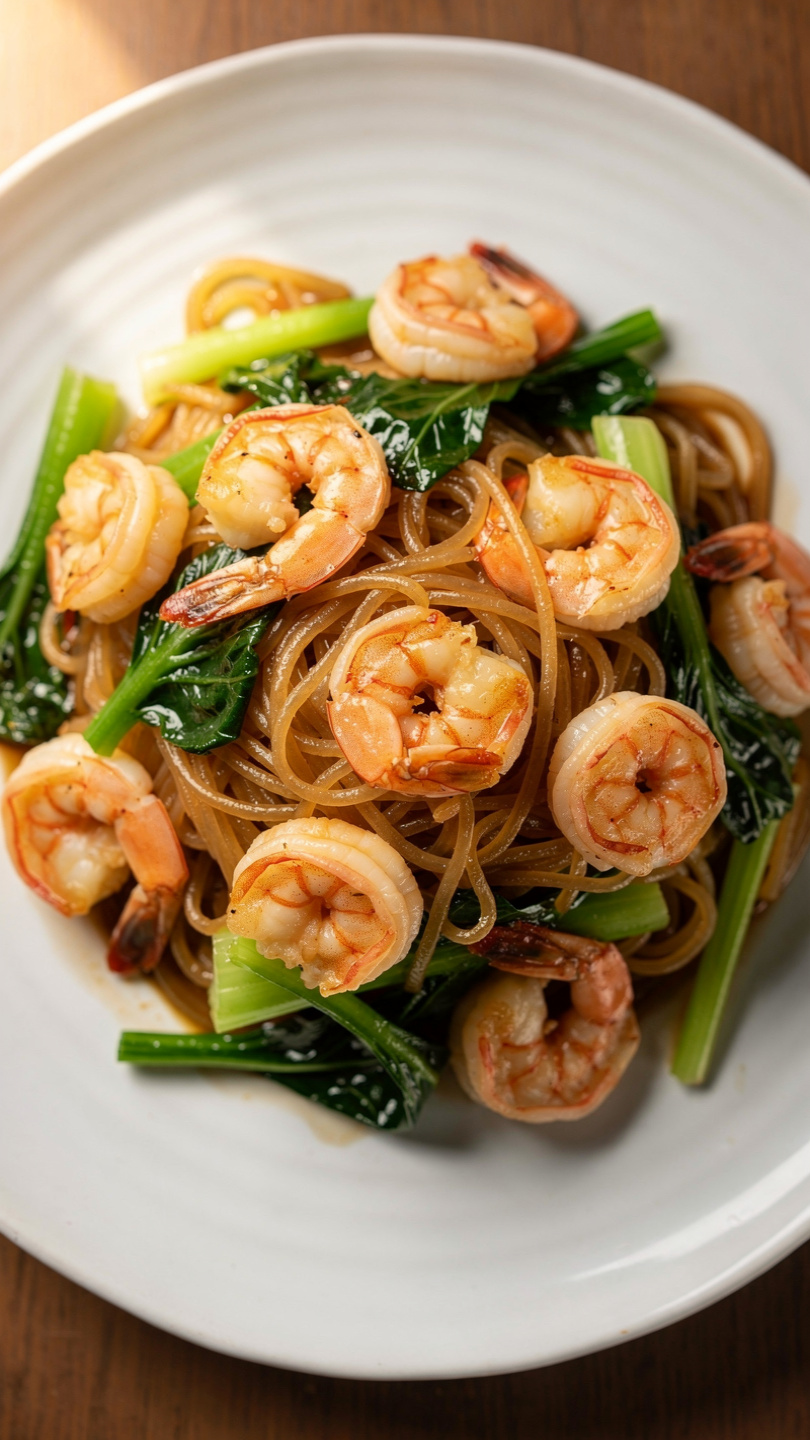
Shrimp Stir Fry with Rice Noodles
This easy shrimp stir fry with rice noodles comes together in under 30 minutes with a savory, garlicky sauce and crisp vegetables. A naturally gluten-free noodle dish the whole family will love.

The Weeknight Stir Fry That Actually Tastes Like Takeout
There is something deeply satisfying about a bowl of glossy, saucy noodles loaded with plump shrimp and crisp-tender vegetables. This shrimp stir fry with rice noodles delivers exactly that, and it comes together in about 30 minutes from start to finish. No takeout menu, no delivery wait, no mystery ingredients.
This is one of those easy rice noodle stir fry recipes that earns a permanent spot in your weeknight rotation. The sauce is savory and just a little sweet, the shrimp cook in under four minutes, and the whole dish has a satisfying wok-tossed depth that makes it feel far more impressive than the effort involved.
And because rice noodles are naturally gluten free, this is also a fantastic gluten-free noodle stir fry that does not require any complicated substitutions or specialty products. It is simply the way the dish is built.
Why This Recipe Works
A great stir fry comes down to a few non-negotiable principles: high heat, a well-balanced sauce, and ingredients that are prepped before you ever touch the stove. This recipe is designed with all three in mind.
The sauce uses tamari (or gluten-free soy sauce), oyster sauce, rice vinegar, and just a touch of honey to balance the salt. A small cornstarch slurry thickens everything so the sauce coats every noodle strand beautifully rather than pooling at the bottom of the bowl.
The vegetables, crisp snap peas, sweet red bell pepper, and shredded carrots, are chosen for their fast cook time and bright color. They hold their texture under high heat, which means you get that satisfying crunch with every bite rather than a pile of limp greens.
Chef's Tip: The single most important thing you can do for a great stir fry is to have every ingredient ready before the wok gets hot. Once you start cooking, there is no time to stop and chop. Mise en place is not just a fancy French phrase here, it is genuinely what separates a good stir fry from a great one.
Choosing the Right Tools and Noodles
For stir fry rice noodle recipes like this one, the equipment and ingredients you choose genuinely shape the final result. A large, heavy wok or a wide 12-inch skillet is essential for high-heat cooking, and medium-width rice noodles hold up far better in the wok than the thinner vermicelli style.
The right pan, the right noodle, and a good tamari make this dish sing.
How to Soak Rice Noodles (and Why It Matters)
One of the most common mistakes in Asian rice noodle recipes with stir fry is over-soaking the noodles before they hit the wok. You want them pliable and bendy but still with a slight bite, because they will finish cooking in the pan.
Here is the method that works every time:
- Place your rice noodles in a large bowl.
- Pour warm (not boiling) water over them.
- Soak for 10 to 15 minutes, checking the texture every few minutes.
- Drain and toss lightly with a few drops of sesame oil to prevent sticking.
Boiling water speeds things up, but it also makes the noodles mushy by the time they hit the wok. Warm water gives you control.
Building the Sauce
This is where the magic lives. The stir fry sauce for this gluten-free rice noodle dish uses just a handful of pantry staples, but the balance is everything.
- Tamari or gluten-free soy sauce: The salty, umami backbone.
- Oyster sauce: Adds richness and a slightly caramelized depth. Look for a certified gluten-free version if needed.
- Rice vinegar: Just a tablespoon to brighten the whole thing and cut through the richness.
- Honey: A gentle touch of sweetness that rounds out the salty and sour notes.
- Cornstarch slurry: The secret to a glossy, clingy sauce that coats every noodle.
Mix the sauce in a bowl before you start cooking. Once the wok is hot, things move fast.
Tips for Perfect Shrimp Every Time
Shrimp is wonderfully quick to cook, which is exactly why it is easy to overcook. Pink and just opaque is the goal. The moment the shrimp curl into a tight C shape and turn bright pink, they are done.
Cook the shrimp first in a single layer, remove them from the wok, then build the rest of the stir fry. They go back in at the very end just to warm through. This two-stage approach keeps them tender and prevents them from turning rubbery.
Chef's Tip: Pat the shrimp completely dry before they go into the wok. Moisture creates steam, and steam is the enemy of the sear you want. Dry shrimp = better color, better flavor.
Ready to bring it all together? Here is the full recipe:
Shrimp Stir Fry with Rice Noodles
This easy shrimp stir fry with rice noodles comes together in under 30 minutes with a savory, garlicky sauce and crisp vegetables. A naturally gluten-free noodle dish the whole family will love.
Ingredients
- 8 oz rice noodles, medium width, soaked according to package directions
- 1 lb large shrimp, peeled and deveined, tails removed
- 2 tbsp sesame oil, divided
- 4 garlic cloves, minced
- 1 tbsp fresh ginger, peeled and finely grated
- 1 red bell pepper, thinly sliced
- 1 cup snap peas, strings removed
- 1/2 cup shredded carrots
- 3 tbsp gluten-free tamari or soy sauce, use tamari for a fully gluten-free dish
- 2 tbsp oyster sauce, use gluten-free oyster sauce if needed
- 1 tbsp rice vinegar
- 1 tsp honey
- 1 tsp cornstarch, mixed with 1 tbsp cold water to make a slurry
- 3 green onions, thinly sliced, for garnish
- 1 tbsp sesame seeds, for garnish
- 1/4 tsp red pepper flakes, optional, for heat
Instruction
Soak the rice noodles in warm water for 10 to 15 minutes until pliable but not fully soft. Drain and set aside.
In a small bowl, whisk together the tamari, oyster sauce, rice vinegar, honey, and cornstarch slurry. Set the sauce aside.
Pat the shrimp dry with paper towels and season lightly with salt and pepper.
Heat 1 tablespoon of sesame oil in a large wok or skillet over high heat until shimmering. Add the shrimp in a single layer and cook for 1 to 2 minutes per side until pink and just cooked through. Transfer to a plate and set aside.
Add the remaining tablespoon of sesame oil to the wok. Add the garlic and ginger and stir fry for 30 seconds until fragrant.
Add the red bell pepper, snap peas, and shredded carrots. Stir fry over high heat for 2 to 3 minutes until the vegetables are tender-crisp.
Add the drained rice noodles to the wok and pour the sauce over everything. Toss well using tongs to coat the noodles and vegetables evenly. Cook for 1 to 2 minutes until the sauce thickens and clings to the noodles.
Return the cooked shrimp to the wok and toss to combine. Heat through for 30 seconds.
Taste and adjust seasoning with additional tamari or red pepper flakes as desired.
Divide into bowls and garnish with green onions and sesame seeds. Serve immediately.
Equipment
- Large wok or 12-inch skillet
- Mixing bowls
- Tongs
- Sharp chef's knife
- Cutting board
- Fine grater or microplane (for ginger)
- Colander
Notes
Serving, Storing, and Variations
This gluten-free rice noodle stir fry is best served immediately, straight from the wok into wide bowls. Top generously with sliced green onions and a scatter of sesame seeds for crunch.
Want to switch things up? Here are a few variations that work beautifully with this base recipe:
- Spicy version: Add a tablespoon of chili garlic sauce or sambal oelek to the sauce.
- Chicken stir fry with rice noodles: Swap the shrimp for thinly sliced chicken thigh. Add an extra 2 to 3 minutes of cook time.
- Vegetarian: Use pressed, cubed firm tofu and a splash of vegetable broth in place of the oyster sauce.
- Extra vegetables: Baby bok choy, mushrooms, and broccolini all work wonderfully here.
Leftovers keep in the refrigerator for up to 3 days. Reheat in a skillet with a small splash of water to bring the noodles back to life. Enjoy every last bite.